Menu Close

How Does Ammonia Affect Poultry ?

แอมโมเนียส่งผลกระทบต่อสัตว์ปีกอย่างไร

How Does Ammonia Affect Poultry ?

Research on poultry has shown varying results regarding the effects of ammonia levels on productivity. Some studies recommend that ammonia concentrations should not exceed 25 ppm, while others indicate that prolonged exposure to 20 ppm can already lead to problems such as weakened immune systems and respiratory damage.


Another study found that when poultry can choose between environments with different ammonia levels, they prefer areas with concentrations below 11 ppm.


Toxic Effects of Ammonia

Ammonia is toxic to animals. High concentrations can cause clear and serious symptoms, including


  • Breathing difficulties

  • Tracheal irritation

  • Airsacculitis (air sac inflammation)

  • Eye irritation and conjunctivitis

  • Multiple combined respiratory disorders


Even at lower concentrations, ammonia can still have negative effects. Many studies have shown that continuous exposure to 20–25 ppm during the production cycle can


  • Increase the risk of secondary infections (viral and bacterial)

  • Reduce feed efficiency

  • Cause tissue damage


In broilers exposed to 20–30 ppm for 16–28 days, these negative effects become more pronounced.


Impact on Poultry Types

  • Turkeys: Studies show that birds exposed to 10–40 ppm of ammonia and infected with E. coli had higher bacterial loads in their lungs compared to those not exposed.

  • Layer chickens: Early exposure to ammonia may cause long-term effects, potentially reducing future egg production. Continuous exposure to high ammonia levels can also lead to decreased egg production.


Microscopic and Physiological Effects

At the microscopic level, ammonia exposure can lead to:

  • Reduced intestinal surface area, affecting nutrient absorption

  • Decreased resistance to oxidative stress

  • Lower digestive efficiency

  • Negative impacts on immune system organs


Even short-term exposure to high ammonia concentrations can be as harmful as long-term exposure to moderate levels.


Ammonia Exposure Levels and Effects


  • 5 ppm: Minimum detectable level

  • 6 ppm: Eye and respiratory irritation

  • 11 ppm: Reduced animal productivity

  • 25 ppm: Maximum acceptable exposure (1 hour)

  • 35 ppm: Maximum acceptable exposure (10 minutes)

  • 40 ppm: Headache, nausea, and loss of appetite in humans

  • 50 ppm: Severe reduction in animal productivity and health; increased risk of pneumonia

  • 100 ppm: Sneezing, excessive salivation, and mucous membrane irritation in animals

  • 300 ppm or higher: Immediately dangerous to human life and health


Ammonia poses significant risks to both poultry and humans. Proper environmental control, ventilation, and ammonia management are essential to ensure animal welfare, maintain productivity, and protect worker health.


AMMONIA-SENSOR

AMMONIA-SENSOR


• Input Voltage: 12 VDC
• Power Consumption : < 10 watts
• Output Voltage: 0-10 VDC
• Output Impedance: 16 Ohms .
• Ammonia Range: 0-100 ppm.
• Operating Temperature: -25 to +70°C
• Accuract: 0-100 ppm +/-3% of Reading
• Sensor Element Type: MEMS
• Max. Cable Length: 150 Meter

#TempView #Controller #temp #Rtron #Alarm #SENSOR

#SensorNH3 #แอมโมเนีย #SENSORAMMONIA #AMMONIASENSOR #เลี้ยงไก่ #SensorCO2 #เซนเซอร์ตรวจคาร์บอนไดออกไซต์

How Does Ammonia Affect Poultry ?

Research on poultry has shown varying results regarding the effects of ammonia levels on productivity. Some studies recommend that ammonia concentrations should not exceed 25 ppm, while others indicate that prolonged exposure to 20 ppm can already lead to problems such as weakened immune systems and respiratory damage.
 
Another study found that when poultry can choose between environments with different ammonia levels, they prefer areas with concentrations below 11 ppm.
 
Toxic Effects of Ammonia
Ammonia is toxic to animals. High concentrations can cause clear and serious symptoms, including
 
  • Breathing difficulties
  • Tracheal irritation
  • Airsacculitis (air sac inflammation)
  • Eye irritation and conjunctivitis
  • Multiple combined respiratory disorders
 
Even at lower concentrations, ammonia can still have negative effects. Many studies have shown that continuous exposure to 20–25 ppm during the production cycle can
 
  • Increase the risk of secondary infections (viral and bacterial)
  • Reduce feed efficiency
  • Cause tissue damage
 
In broilers exposed to 20–30 ppm for 16–28 days, these negative effects become more pronounced.
 

Impact on Poultry Types

  • Turkeys: Studies show that birds exposed to 10–40 ppm of ammonia and infected with E. coli had higher bacterial loads in their lungs compared to those not exposed.
  • Layer chickens: Early exposure to ammonia may cause long-term effects, potentially reducing future egg production. Continuous exposure to high ammonia levels can also lead to decreased egg production.
 

Microscopic and Physiological Effects

At the microscopic level, ammonia exposure can lead to:
  • Reduced intestinal surface area, affecting nutrient absorption
  • Decreased resistance to oxidative stress
  • Lower digestive efficiency
  • Negative impacts on immune system organs
 
Even short-term exposure to high ammonia concentrations can be as harmful as long-term exposure to moderate levels.
 

Ammonia Exposure Levels and Effects

 
  • 5 ppm: Minimum detectable level
  • 6 ppm: Eye and respiratory irritation
  • 11 ppm: Reduced animal productivity
  • 25 ppm: Maximum acceptable exposure (1 hour)
  • 35 ppm: Maximum acceptable exposure (10 minutes)
  • 40 ppm: Headache, nausea, and loss of appetite in humans
  • 50 ppm: Severe reduction in animal productivity and health; increased risk of pneumonia
  • 100 ppm: Sneezing, excessive salivation, and mucous membrane irritation in animals
  • 300 ppm or higher: Immediately dangerous to human life and health
 
Ammonia poses significant risks to both poultry and humans. Proper environmental control, ventilation, and ammonia management are essential to ensure animal welfare, maintain productivity, and protect worker health.


AMMONIA-SENSOR

AMMONIA-SENSOR


• Input Voltage: 12 VDC
• Power Consumption : < 10 watts
• Output Voltage: 0-10 VDC
• Output Impedance: 16 Ohms .
• Ammonia Range: 0-100 ppm.
• Operating Temperature: -25 to +70°C
• Accuract: 0-100 ppm +/-3% of Reading
• Sensor Element Type: MEMS
• Max. Cable Length: 150 Meter

#TempView #Controller #temp #Rtron #Alarm #SENSOR

#SensorNH3 #แอมโมเนีย #SENSORAMMONIA #AMMONIASENSOR #เลี้ยงไก่ #SensorCO2 #เซนเซอร์ตรวจคาร์บอนไดออกไซต์

How Does Ammonia Affect Poultry ?

Research on poultry has shown varying results regarding the effects of ammonia levels on productivity. Some studies recommend that ammonia concentrations should not exceed 25 ppm, while others indicate that prolonged exposure to 20 ppm can already lead to problems such as weakened immune systems and respiratory damage.
 
Another study found that when poultry can choose between environments with different ammonia levels, they prefer areas with concentrations below 11 ppm.
 

Toxic Effects of Ammonia

Ammonia is toxic to animals. High concentrations can cause clear and serious symptoms, including
 
  • Breathing difficulties
  • Tracheal irritation
  • Airsacculitis (air sac inflammation)
  • Eye irritation and conjunctivitis
  • Multiple combined respiratory disorders
 
Even at lower concentrations, ammonia can still have negative effects. Many studies have shown that continuous exposure to 20–25 ppm during the production cycle can
 
  • Increase the risk of secondary infections (viral and bacterial)
  • Reduce feed efficiency
  • Cause tissue damage
 
In broilers exposed to 20–30 ppm for 16–28 days, these negative effects become more pronounced.
 
Impact on Poultry Types
  • Turkeys: Studies show that birds exposed to 10–40 ppm of ammonia and infected with E. coli had higher bacterial loads in their lungs compared to those not exposed.
  • Layer chickens: Early exposure to ammonia may cause long-term effects, potentially reducing future egg production. Continuous exposure to high ammonia levels can also lead to decreased egg production.
 

Microscopic and Physiological Effects

At the microscopic level, ammonia exposure can lead to:
  • Reduced intestinal surface area, affecting nutrient absorption
  • Decreased resistance to oxidative stress
  • Lower digestive efficiency
  • Negative impacts on immune system organs
 
Even short-term exposure to high ammonia concentrations can be as harmful as long-term exposure to moderate levels.
 
Ammonia Exposure Levels and Effects
 
  • 5 ppm: Minimum detectable level
  • 6 ppm: Eye and respiratory irritation
  • 11 ppm: Reduced animal productivity
  • 25 ppm: Maximum acceptable exposure (1 hour)
  • 35 ppm: Maximum acceptable exposure (10 minutes)
  • 40 ppm: Headache, nausea, and loss of appetite in humans
  • 50 ppm: Severe reduction in animal productivity and health; increased risk of pneumonia
  • 100 ppm: Sneezing, excessive salivation, and mucous membrane irritation in animals
  • 300 ppm or higher: Immediately dangerous to human life and health
 
Ammonia poses significant risks to both poultry and humans. Proper environmental control, ventilation, and ammonia management are essential to ensure animal welfare, maintain productivity, and protect worker health.


AMMONIA-SENSOR
AMMONIA-SENSOR
 
• Input Voltage: 12 VDC
• Power Consumption : < 10 watts
• Output Voltage: 0-10 VDC
• Output Impedance: 16 Ohms .
• Ammonia Range: 0-100 ppm.
• Operating Temperature: -25 to +70°C
• Accuract: 0-100 ppm +/-3% of Reading
• Sensor Element Type: MEMS
• Max. Cable Length: 150 Meter
#TempView #Controller #temp #Rtron #Alarm #SENSOR
#SensorNH3 #แอมโมเนีย #SENSORAMMONIA #AMMONIASENSOR #เลี้ยงไก่ #SensorCO2 #เซนเซอร์ตรวจคาร์บอนไดออกไซต์
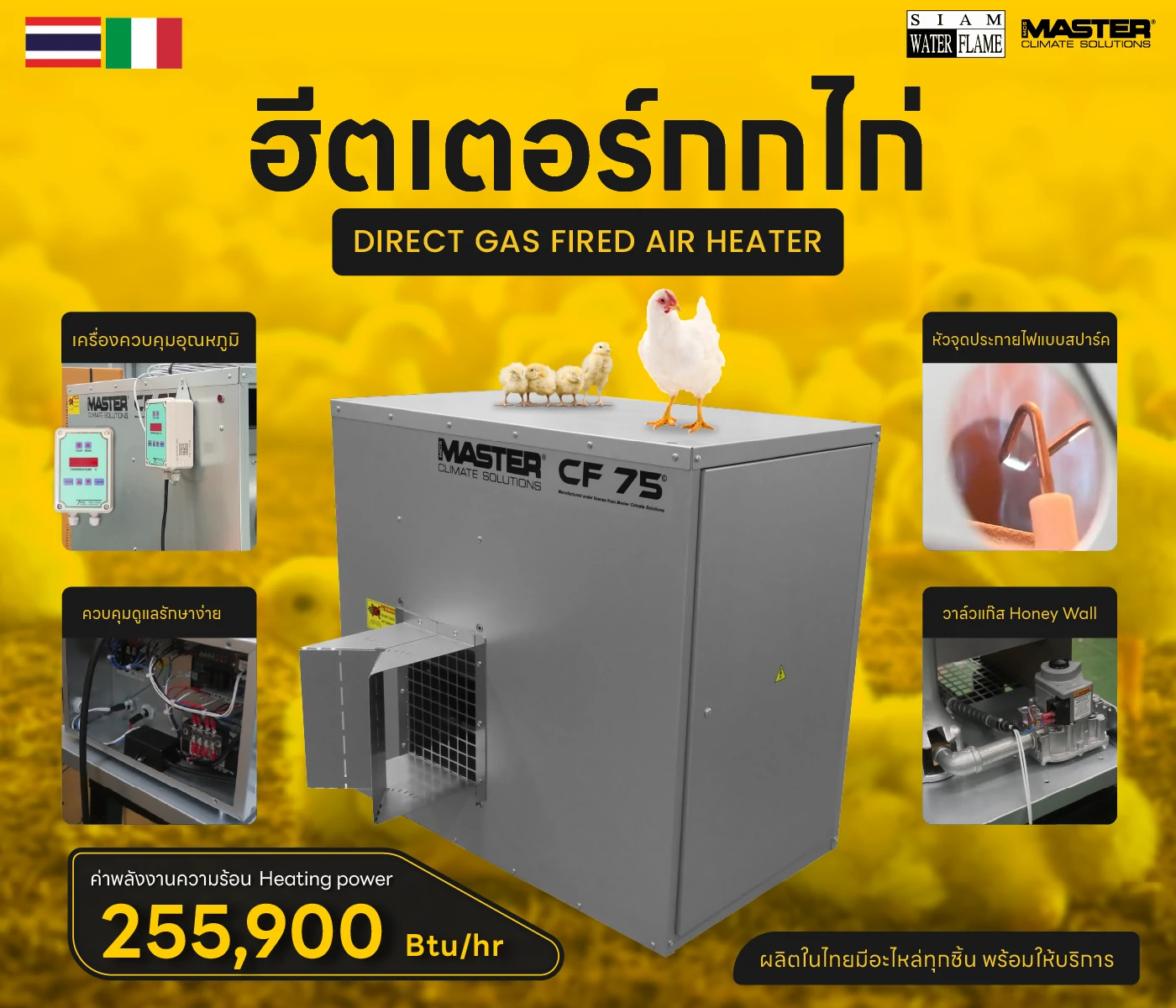
HEATERS CF 75 เครื่องทำความร้อน ในการเลี้ยงสัตว์

ดูข้อมูล เครื่อง กกไก่ เพิ่มเติม >> Products 

ติดตามเพจ เพิ่มเติม >> FACEBOOK

error: Content is protected !!