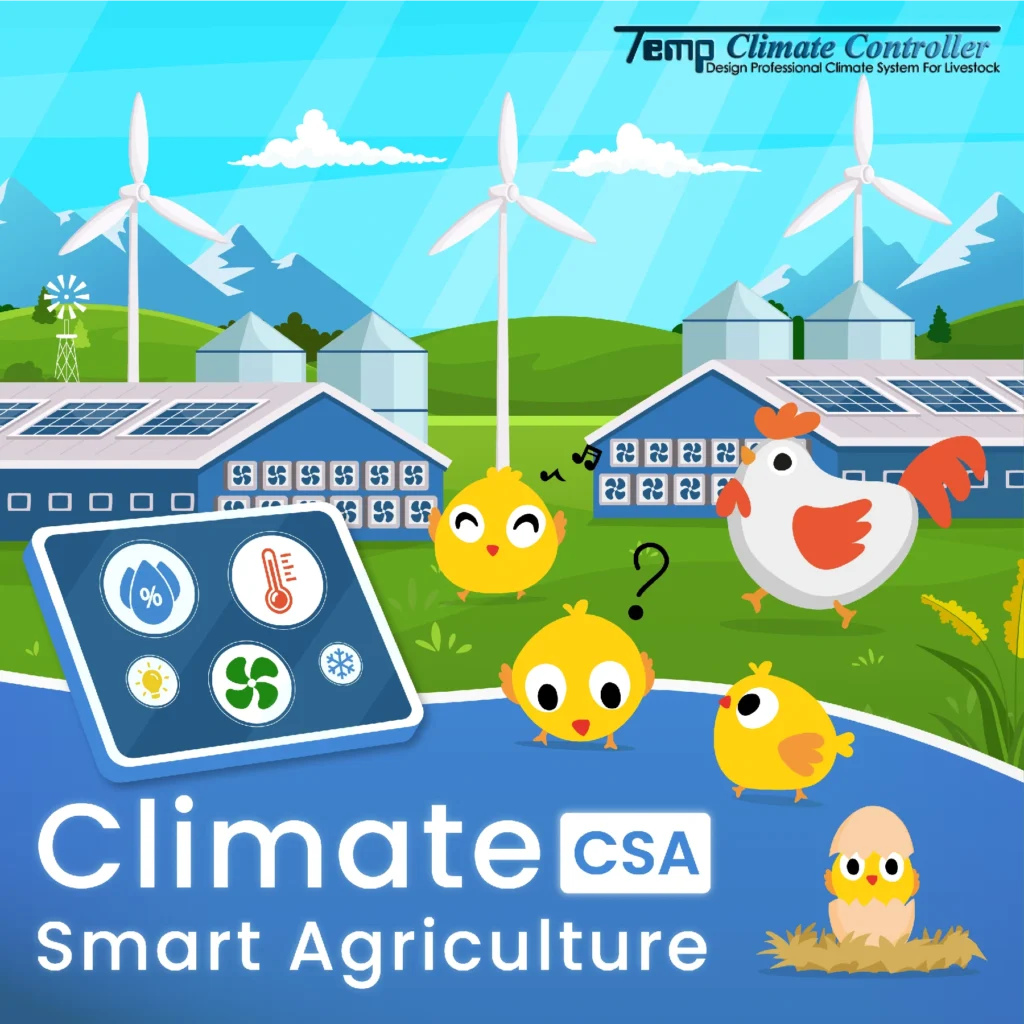
Climate-Smart Agriculture (CSA) Smart Farming for Climate Change
Climate-Smart Agriculture (CSA), or “climate-smart farming,” is an approach designed to help agriculture effectively respond to climate change—one of the most critical challenges facing global agricultural systems today. Rising temperatures, unpredictable rainfall patterns, more severe droughts, and increased risks from pests and diseases all directly impact productivity, food quality, and food security.
CSA provides a comprehensive framework that enables farmers to adapt, mitigate, and sustainably improve productivity. It is built upon three key pillars
1. Increased Productivity
The use of technology and innovation to enhance yield per unit area, reduce losses, and improve farmers’ income.
2. Adaptation
Designing resilient production systems that can withstand climate risks, such as selecting heat- and drought-tolerant crop varieties and improving water management efficiency.
3. Mitigation
Reducing greenhouse gas emissions by optimizing resource use, adopting low-carbon farming practices, and improving farm management technologies.
Technologies Supporting CSA
Sensors and IoT for real-time monitoring of temperature, soil moisture, and air quality to support precise decision-making
Smart energy management systems to reduce energy consumption in livestock housing and crop production
Big Data and AI for climate analysis, risk prediction, and management recommendations
Climate control systems, essential for maintaining stable production conditions despite external weather fluctuations
CSA in Closed House Livestock Farming
In the livestock sector, especially closed house poultry farming, environmental control plays a crucial role. Improper temperature and humidity can negatively affect animal health, growth performance, and Feed Conversion Ratio (FCR).
Implementing TempClimateController systems is a practical CSA solution that enables farms to
Precisely control temperature, humidity, and airflow
Reduce energy consumption while improving ventilation efficiency
Adapt to unpredictable climate conditions without compromising productivity
Support environmentally friendly production
Lower long-term operational costs
Driving Sustainable Agriculture Forward
Climate-Smart Agriculture is not just a theoretical concept—it is a practical approach that relies on technology, innovation, and automation systems to transform agriculture.
TempClimateController plays a vital role in helping Thai farms transition toward truly sustainable and competitive climate-smart farming systems.
#SmartFarming #TempClimateController #SustainableAgriculture #ClimateSmartAgriculture #FarmTechnology
Climate-Smart Agriculture (CSA) Smart Farming for Climate Change
Climate-Smart Agriculture (CSA), or “climate-smart farming,” is an approach designed to help agriculture effectively respond to climate change—one of the most critical challenges facing global agricultural systems today. Rising temperatures, unpredictable rainfall patterns, more severe droughts, and increased risks from pests and diseases all directly impact productivity, food quality, and food security.
CSA provides a comprehensive framework that enables farmers to adapt, mitigate, and sustainably improve productivity. It is built upon three key pillars
1. Increased Productivity
The use of technology and innovation to enhance yield per unit area, reduce losses, and improve farmers’ income.
2. Adaptation
Designing resilient production systems that can withstand climate risks, such as selecting heat- and drought-tolerant crop varieties and improving water management efficiency.
3. Mitigation
Reducing greenhouse gas emissions by optimizing resource use, adopting low-carbon farming practices, and improving farm management technologies.
Technologies Supporting CSA
Sensors and IoT for real-time monitoring of temperature, soil moisture, and air quality to support precise decision-making
Smart energy management systems to reduce energy consumption in livestock housing and crop production
Big Data and AI for climate analysis, risk prediction, and management recommendations
Climate control systems, essential for maintaining stable production conditions despite external weather fluctuations
CSA in Closed House Livestock Farming
In the livestock sector, especially closed house poultry farming, environmental control plays a crucial role. Improper temperature and humidity can negatively affect animal health, growth performance, and Feed Conversion Ratio (FCR).
Implementing TempClimateController systems is a practical CSA solution that enables farms to
Precisely control temperature, humidity, and airflow
Reduce energy consumption while improving ventilation efficiency
Adapt to unpredictable climate conditions without compromising productivity
Support environmentally friendly production
Lower long-term operational costs
Driving Sustainable Agriculture Forward
Climate-Smart Agriculture is not just a theoretical concept—it is a practical approach that relies on technology, innovation, and automation systems to transform agriculture.
TempClimateController plays a vital role in helping Thai farms transition toward truly sustainable and competitive climate-smart farming systems.
#SmartFarming #TempClimateController #SustainableAgriculture #ClimateSmartAgriculture #FarmTechnology
Climate-Smart Agriculture (CSA) Smart Farming for Climate Change
Climate-Smart Agriculture (CSA), or “climate-smart farming,” is an approach designed to help agriculture effectively respond to climate change—one of the most critical challenges facing global agricultural systems today. Rising temperatures, unpredictable rainfall patterns, more severe droughts, and increased risks from pests and diseases all directly impact productivity, food quality, and food security.
CSA provides a comprehensive framework that enables farmers to adapt, mitigate, and sustainably improve productivity. It is built upon three key pillars
1. Increased Productivity
The use of technology and innovation to enhance yield per unit area, reduce losses, and improve farmers’ income.
2. Adaptation
Designing resilient production systems that can withstand climate risks, such as selecting heat- and drought-tolerant crop varieties and improving water management efficiency.
3. Mitigation
Reducing greenhouse gas emissions by optimizing resource use, adopting low-carbon farming practices, and improving farm management technologies.
Technologies Supporting CSA
Sensors and IoT for real-time monitoring of temperature, soil moisture, and air quality to support precise decision-making
Smart energy management systems to reduce energy consumption in livestock housing and crop production
Big Data and AI for climate analysis, risk prediction, and management recommendations
Climate control systems, essential for maintaining stable production conditions despite external weather fluctuations
CSA in Closed House Livestock Farming
In the livestock sector, especially closed house poultry farming, environmental control plays a crucial role. Improper temperature and humidity can negatively affect animal health, growth performance, and Feed Conversion Ratio (FCR).
Implementing TempClimateController systems is a practical CSA solution that enables farms to
Precisely control temperature, humidity, and airflow
Reduce energy consumption while improving ventilation efficiency
Adapt to unpredictable climate conditions without compromising productivity
Support environmentally friendly production
Lower long-term operational costs