Raising Chickens in Winter What You Should Do
“Raising chickens in winter requires extra care.” Farmers should pay close attention during the cold season, as low temperatures can make chickens more susceptible to illness. Proper housing adjustments are essential to keep birds warm.
Use curtains or sacks to block cold winds around the poultry house, while still maintaining adequate ventilation. Additional heating should be provided, especially for young chicks. However, avoid open fires, as they may pose safety risks.
What Farmers Should Do in Winter
1) Install Wind Protection
Use plastic curtains, tarpaulins, or windbreak sheets around the poultry house to prevent cold drafts, especially at night. Some ventilation openings may be partially closed, but minimum ventilation must still be maintained to prevent moisture buildup.
2) Temperature Control
Install heating systems in the poultry house to maintain warmth. Provide additional brooders for young chicks, as they are more sensitive to temperature changes and cannot adapt as well as older chickens. Maintaining optimal temperature helps reduce the energy chickens use to keep warm.
3) Vitamin Supplementation
Chickens may require more nutrients during cold weather. Supplementing vitamins and minerals helps strengthen their immune system, especially:
Vitamin A / Beta-carotene: Helps protect against infections affecting the eyes, nose, throat, and respiratory system
Vitamin E: Helps reduce inflammation in tissues and supports respiratory health
Vitamin D: Supports calcium absorption and helps improve resistance to respiratory diseases such as colds, bronchitis, and pneumonia
Note: Vitamins A and E are fat-soluble and should be given with feed containing fats such as formulated feed, corn, bran, oil, or sunflower seeds.
4) Proper Feeding Management
Chickens tend to consume more feed during winter because they need more energy to maintain body temperature. This may affect the Feed Conversion Ratio (FCR), as chickens eat more to gain the same body weight compared to normal conditions.
Heating Solution for Poultry Farms
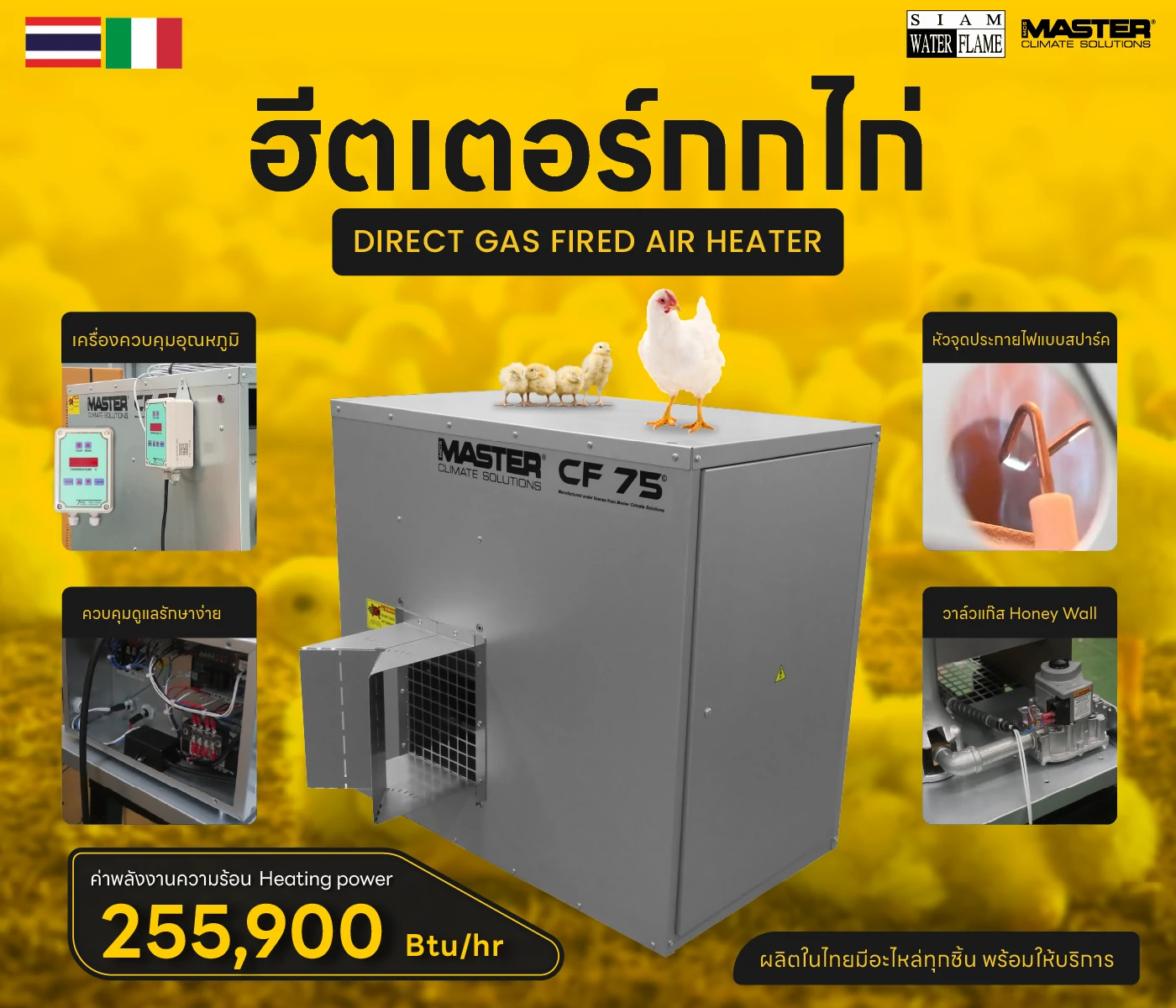
Master CF 75 Chick Brooder Heater is designed to provide warmth for chicks and maintain optimal temperature in poultry houses.
Gas-powered air heater suitable for both indoor and outdoor use
Easy installation with cost-effective fuel consumption
Ideal for high airflow areas such as poultry houses, livestock farms, warehouses, and factories
Compatible with LPG or natural gas
Dual ignition system for reliable startup in all weather conditions
For more information
+66-349-89701, 702, 703, 704
+66-939477986 (International sales)
Line: https://page.line.me/iue8501l
Email: Sales@waterflame.co.th
#MasterHeaterCF75 #Heater #PoultryFarm #SmartFarm #ClimateControl #Broiler #Layer #FarmEquipment
Raising Chickens in Winter What You Should Do
“Raising chickens in winter requires extra care.” Farmers should pay close attention during the cold season, as low temperatures can make chickens more susceptible to illness. Proper housing adjustments are essential to keep birds warm.
Use curtains or sacks to block cold winds around the poultry house, while still maintaining adequate ventilation. Additional heating should be provided, especially for young chicks. However, avoid open fires, as they may pose safety risks.
What Farmers Should Do in Winter
1) Install Wind Protection
Use plastic curtains, tarpaulins, or windbreak sheets around the poultry house to prevent cold drafts, especially at night. Some ventilation openings may be partially closed, but minimum ventilation must still be maintained to prevent moisture buildup.
2) Temperature Control
Install heating systems in the poultry house to maintain warmth. Provide additional brooders for young chicks, as they are more sensitive to temperature changes and cannot adapt as well as older chickens. Maintaining optimal temperature helps reduce the energy chickens use to keep warm.
3) Vitamin Supplementation
Chickens may require more nutrients during cold weather. Supplementing vitamins and minerals helps strengthen their immune system, especially:
Vitamin A / Beta-carotene: Helps protect against infections affecting the eyes, nose, throat, and respiratory system
Vitamin E: Helps reduce inflammation in tissues and supports respiratory health
Vitamin D: Supports calcium absorption and helps improve resistance to respiratory diseases such as colds, bronchitis, and pneumonia
Note: Vitamins A and E are fat-soluble and should be given with feed containing fats such as formulated feed, corn, bran, oil, or sunflower seeds.
4) Proper Feeding Management
Chickens tend to consume more feed during winter because they need more energy to maintain body temperature. This may affect the Feed Conversion Ratio (FCR), as chickens eat more to gain the same body weight compared to normal conditions.
Heating Solution for Poultry Farms
Master CF 75 Chick Brooder Heater is designed to provide warmth for chicks and maintain optimal temperature in poultry houses.
Gas-powered air heater suitable for both indoor and outdoor use
Easy installation with cost-effective fuel consumption
Ideal for high airflow areas such as poultry houses, livestock farms, warehouses, and factories
Compatible with LPG or natural gas
Dual ignition system for reliable startup in all weather conditions
For more information
+66-349-89701, 702, 703, 704
+66-939477986 (International sales)
Line: https://page.line.me/iue8501l
Email: Sales@waterflame.co.th
#MasterHeaterCF75 #Heater #PoultryFarm #SmartFarm #ClimateControl #Broiler #Layer #FarmEquipment
Raising Chickens in Winter What You Should Do
“Raising chickens in winter requires extra care.” Farmers should pay close attention during the cold season, as low temperatures can make chickens more susceptible to illness. Proper housing adjustments are essential to keep birds warm.
Use curtains or sacks to block cold winds around the poultry house, while still maintaining adequate ventilation. Additional heating should be provided, especially for young chicks. However, avoid open fires, as they may pose safety risks.
What Farmers Should Do in Winter
1) Install Wind Protection
Use plastic curtains, tarpaulins, or windbreak sheets around the poultry house to prevent cold drafts, especially at night. Some ventilation openings may be partially closed, but minimum ventilation must still be maintained to prevent moisture buildup.
2) Temperature Control
Install heating systems in the poultry house to maintain warmth. Provide additional brooders for young chicks, as they are more sensitive to temperature changes and cannot adapt as well as older chickens. Maintaining optimal temperature helps reduce the energy chickens use to keep warm.
3) Vitamin Supplementation
Chickens may require more nutrients during cold weather. Supplementing vitamins and minerals helps strengthen their immune system, especially:
Vitamin A / Beta-carotene: Helps protect against infections affecting the eyes, nose, throat, and respiratory system
Vitamin E: Helps reduce inflammation in tissues and supports respiratory health
Vitamin D: Supports calcium absorption and helps improve resistance to respiratory diseases such as colds, bronchitis, and pneumonia
Note: Vitamins A and E are fat-soluble and should be given with feed containing fats such as formulated feed, corn, bran, oil, or sunflower seeds.
4) Proper Feeding Management
Chickens tend to consume more feed during winter because they need more energy to maintain body temperature. This may affect the Feed Conversion Ratio (FCR), as chickens eat more to gain the same body weight compared to normal conditions.
Heating Solution for Poultry Farms
Master CF 75 Chick Brooder Heater is designed to provide warmth for chicks and maintain optimal temperature in poultry houses.
Gas-powered air heater suitable for both indoor and outdoor use
Easy installation with cost-effective fuel consumption
Ideal for high airflow areas such as poultry houses, livestock farms, warehouses, and factories
Compatible with LPG or natural gas
Dual ignition system for reliable startup in all weather conditions